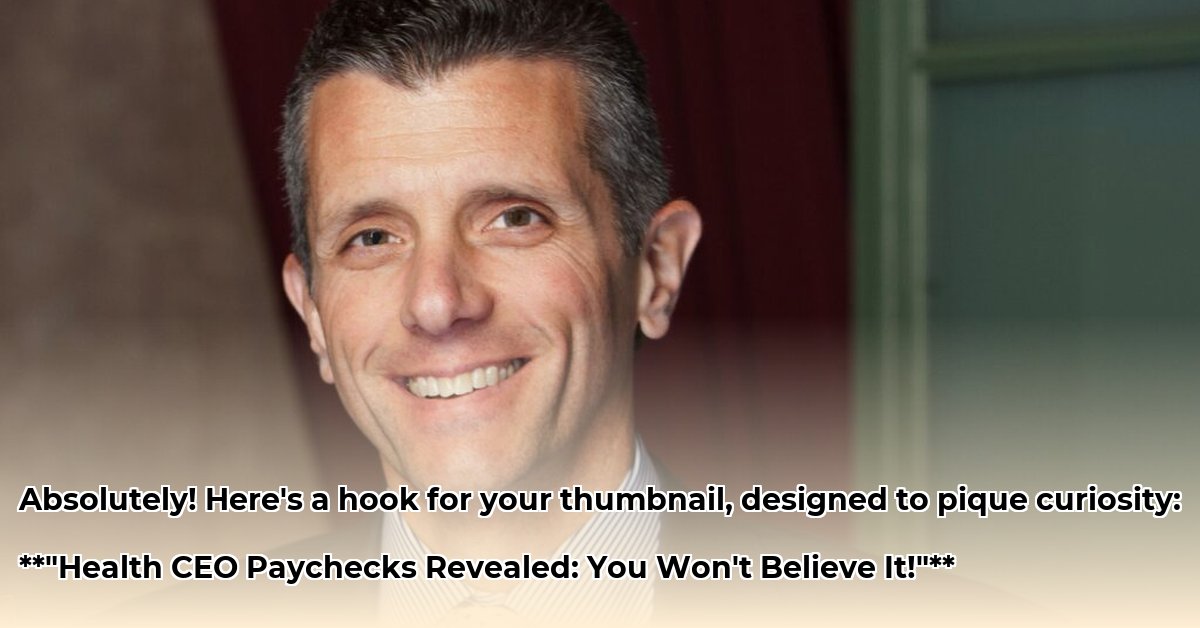
Unveiled: David Cordani's Net Worth and the Payday at the Top for Health Insurance CEOs
August 23, 2025 · 8 min · 1533 words · Suzanne Franklin
# Unveiled: David Cordani's Net Worth and the Payday at the Top for Health Insurance CEOs

Ever wondered how much the top executives at health insurance companies make? We're diving into the world of David Cordani, a prominent figure in the industry, and attempting to estimate his net worth and executive compensation structure. This exploration isn't solely focused on one individual's wealth; we'll also examine the earnings of other health insurance CEOs and the factors that contribute to their substantial compensation packages. By analyzing this data, we aim to provide a clearer understanding of the financial dynamics at the highest levels of the healthcare industry.

## David Cordani Net Worth: Health Insurance CEO Compensation and Financial Insights

For context, you might want to read about [executive pay](https://toby-mathis-net-worth.pages.dev). Estimating the david cordani net worth, and that of other top executives, requires unraveling the complexities of executive compensation within the health insurance sector. This necessitates a meticulous examination of various components, including salaries, stock options, bonuses, and other assets accumulated over their careers. So, where do we even begin to determine a plausible net worth figure? Let's delve into the various aspects that influence these astronomical sums.

### Decoding Health Insurance CEO Pay and Its Impact on Healthcare Costs

Executive pay in the health insurance industry is, generally, very high. In 2022, the top six CEOs in the industry collectively earned $123 million. Joseph Zubretsky from Molina Healthcare may have led that group. These substantial figures can be attributed to factors such as company growth and financial performance. But what specific elements contribute to these massive pay packages? Moreover, how does ceo compensation impact the healthcare landscape?

A CEO's total compensation goes beyond the base salary. Stock options and incentive payments are also included. Andrew Witty, who heads up UnitedHealth Group, saw a substantial increase in his overall compensation package in one year, highlighting the volatility of these figures across both individuals and the industry.

Executive compensation can be extremely complex. It's often directly linked to stock performance and specific financial goals. This can create conflicts of interest where executives may prioritize shareholder satisfaction over patient care. The complexity of the healthcare system itself can also increase what executives need to be paid.

### Key Factors That Influence a CEO's Net Worth: Salary, Stocks, and More

Several factors influence a CEO's net worth. Salary is obviously a component. Stock options and performance-based bonuses also play key roles. Investments and other assets contribute as well. Determining the david cordani net worth requires examining these different pieces.

Here's a simplified look at the factors involved:

| Source of Wealth | How It Impacts Net Worth |
|---|---|
| Salary | Provides a consistent and reliable flow of income |
| Stock Options | Offers the possibility of big gains if the company does well |
| Bonuses | Rewards CEOs for meeting specific financial goals set by the company |
| Investments | Allows CEOs to diversify their wealth |

### Ethical Considerations in CEO Compensation & Affordable Healthcare

These high levels of executive compensation raise ethical questions. Is it justifiable to pay executives so much considering patient outcomes and the affordability of health insurance premiums? This debate involves patients, investors, and healthcare professionals. It's important to balance shareholder satisfaction with societal needs. Is executive compensation structure fair to all?

Some argue that high executive pay is necessary to attract and retain top talent, who can then drive innovation and improve healthcare delivery. Others contend that these high salaries contribute to rising healthcare costs, making healthcare less accessible for many people.

### What the Future Might Hold for Executive Compensation: Regulations and Pay Models

What steps can health insurance companies take to create a fairer system? More transparency is needed. Company boards should also take a closer look at the metrics they use to determine executive pay. Alternative pay models that don't focus so heavily on short-term stock prices could also be considered.

Investors can push for responsible corporate governance, and consumers can show their support for transparency in healthcare. Government regulators can also examine compensation practices. Change requires collective effort.

Here are some plausible forthcoming measures:

*   More Transparent Standards: Develop clear explanations for how executive compensation is determined that include patient satisfaction levels and health equity.
*   Changes in Regulations: Advocate for regulations that require more transparency and companies to be more accountable for their executive pay decisions.
*   Different Pay Models: Explore pay models that look beyond stock performance.

Ultimately, determining the david cordani net worth isn't just about a number. It reflects industry trends, ethical considerations, and the ongoing discussion about executive compensation. Understanding these components provides a clearer perspective.

## How Does CEO Compensation Impact? Implications for Healthcare and the Economy

Key Takeaways:

*   Executive pay in healthcare, such as that of Cigna's CEO David Cordani, is often tied to company performance, creating a direct incentive for financial success.
*   A substantial portion of CEO compensation comes from stock options and awards, linking executive wealth directly to company valuation and growth.
*   Executive compensation in major health insurance firms has generally risen in recent years, reflecting the increasing complexity and high-stakes nature of the industry.
*   Some critics believe high CEO pay in health services prompts ethical issues, particularly concerning healthcare affordability and accessibility for the general population.
*   Data analytics and digital health innovations play an increasing role in justifying executive compensation, emphasizing the importance of leadership in technological advancement within the sector.
*   There's an ongoing debate about whether CEO pay is justified, given healthcare affordability challenges, sparking discussions about equitable compensation models and social responsibility.

### Understanding Executive Compensation Packages: Incentivizing Performance and Aligning Interests

Executive compensation packages for healthcare CEOs, such as David Cordani of Cigna, are complex structures. They aren't just about a base salary. Instead, they involve a mix of elements designed to incentivize performance and align leadership's interests with those of shareholders. These typically include base salary, performance-based bonuses, stock awards, and stock options. How does ceo compensation impact company strategy? It's often closely linked to metrics like revenue growth and stock price, pushing executives to make decisions that boost these figures. This creates a dynamic where executives are incentivized to drive financial success, potentially impacting strategic decisions and resource allocation within the organization.

### David Cordani's Compensation: A Closer Look at its Components and Determinants

David Cordani's 2024 compensation, reaching $23.25 million, reflects the high stakes and financial complexities of leading a major health insurer. This figure isn't just plucked from thin air. It's determined by Cigna's board of directors. They consider factors like the company's financial performance, its strategic goals, and competitive compensation benchmarks within the industry. Cordani's compensation package mirrors a broader trend of escalating executive pay in the health insurance sector. Is the executive compensation structure transparent and fair to employees?

### The Ethical Considerations: Balancing Executive Pay with Healthcare Affordability

Does hefty compensation for health insurance CEOs raise ethical red flags? Some critics certainly think so, particularly when healthcare affordability remains a significant challenge for many Americans. The argument centers on whether such large payouts are justifiable when many struggle to afford basic medical care and health insurance premiums. This creates a moral quandary: Are these executives being rewarded excessively while patients bear the brunt of high healthcare costs?

### Benchmarking CEO Compensation: Trends and Comparisons Across the Industry

Across the health insurance landscape, CEO compensation varies, but the overall trend points upward. In fact, six CEOs in the industry raked in a record $123 million in a single year. This begs the question: How does ceo compensation impact the broader economy? It certainly fuels debate about income inequality and the distribution of wealth. These figures aren't arbitrary; they're often tied to company performance and shareholder returns. The numbers ultimately underscore the competitive nature of the executive talent market.

### Actionable Intelligence for Stakeholders: Strategies for Investors, Providers, Patients, and Policymakers

| Stakeholders | Short-Term (0-1Y)                                                                                                                                                                | Long-Term (3-5Y)                                                                                                                                                                                                  |
|--------------|------------------------------------------------------------------------------------------------------------------------------------------------------------------------------------|-----------------------------------------------------------------------------------------------------------------------------------------------------------------------------------------------------------------------|
| Investors  | Closely monitor the alignment between CEO compensation and key performance indicators (KPIs) such as revenue growth, profitability, and customer satisfaction. Push for transparency. | Advocate for performance metrics that prioritize long-term value creation and sustainability, not short-term gains. Use shareholder activism to promote responsible executive pay.                            |
| Healthcare Providers | Understand the financial incentives driving decisions at major health insurers like Cigna. Advocate for value-based care models that align incentives across the healthcare system. | Collaborate with health insurers to develop payment models rewarding quality and outcomes, not volume. Negotiate fair reimbursement rates through collective bargaining.                                    |
| Patients  | Stay informed about the ongoing debate surrounding executive pay in healthcare. Advocate for policies promoting affordability and accessibility, like capping CEO pay or increasing pricing transparency. | Support organizations advocating for patient-centered care and greater accountability from health insurers. Advocate for policies prioritizing preventive care and wellness programs.                               |
| Policymakers | Evaluate the impact of existing regulations on executive compensation in the healthcare sector. Consider policies promoting greater transparency and accountability.              | Explore healthcare reforms addressing the root causes of high costs and unequal access. Consider capping executive pay or taxing excessive compensation.                                                                 |